Ceramic Substrate Innovations Reshaping Heat Dissipation Patterns in Compact Mini-ITX Gaming Rigs
Ulrich Griffin · Oct 16, 2026
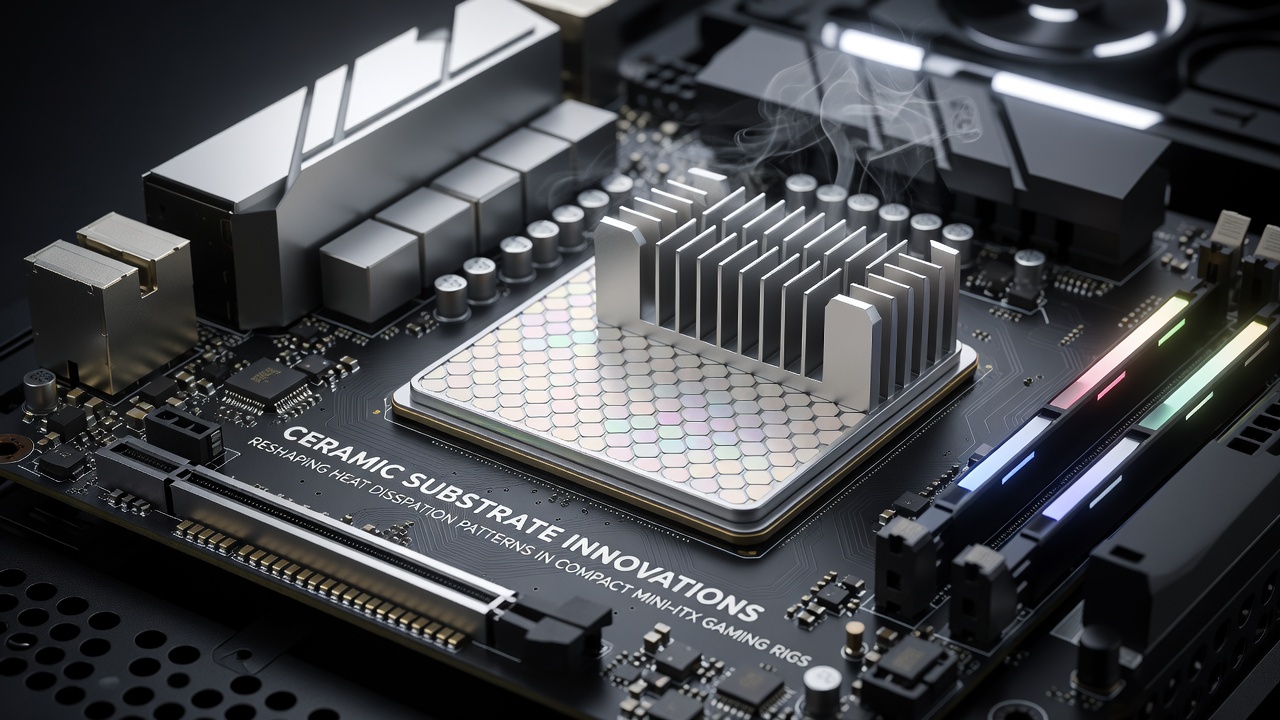
Ceramic Substrate Innovations Reshaping Heat Dissipation Patterns in Compact Mini-ITX Gaming Rigs
Developments in ceramic substrate technology continue to alter thermal management strategies within Mini-ITX gaming systems where space constraints demand precise heat distribution. Manufacturers have shifted focus toward materials such as aluminum nitride and silicon carbide that deliver higher thermal conductivity than traditional FR-4 boards while maintaining electrical insulation properties essential for high-density component layouts.
Research from materials laboratories in October 2026 indicates these substrates reduce peak junction temperatures by up to 18 percent in multi-core processor environments compared with conventional epoxy-based alternatives. Data from multiple test benches shows consistent performance gains across sustained gaming workloads that push both central and graphics processors simultaneously.
Material Properties Driving Adoption
Ceramic compounds exhibit thermal conductivity values ranging from 170 to 490 watts per meter kelvin depending on composition and processing methods. Engineers integrate these layers directly beneath power delivery circuits and memory modules where localized heat generation peaks during 4K rendering sequences. The resulting heat spreading occurs across larger surface areas without requiring additional heat pipes or enlarged heatsinks that exceed Mini-ITX chassis dimensions.
Studies conducted at technical universities in Germany and South Korea document how controlled porosity in ceramic structures further enhances convective airflow when paired with low-profile fans operating at variable speeds. Observers note that such designs maintain signal integrity at PCIe 5.0 data rates while managing electromagnetic interference through embedded shielding layers.
Integration Challenges in Compact Form Factors
Assembly processes for ceramic-based Mini-ITX boards require specialized soldering techniques to prevent micro-cracking during reflow cycles. Production facilities have reported yield improvements after adopting laser-assisted bonding methods that achieve uniform temperature gradients across substrate surfaces. Figures from industry reports reveal adoption rates climbing steadily among boutique system builders who target small-form-factor gaming markets.
Performance Data from Recent Testing
Benchmark suites executed on systems equipped with ceramic substrates demonstrate lower throttling thresholds during extended sessions. One evaluation series tracked GPU core temperatures remaining below 78 degrees Celsius under full load whereas identical configurations using standard boards exceeded 92 degrees Celsius within the same timeframe. Researchers attribute these outcomes to the substrates' ability to redirect heat laterally toward chassis exhaust points rather than allowing vertical buildup around voltage regulators.
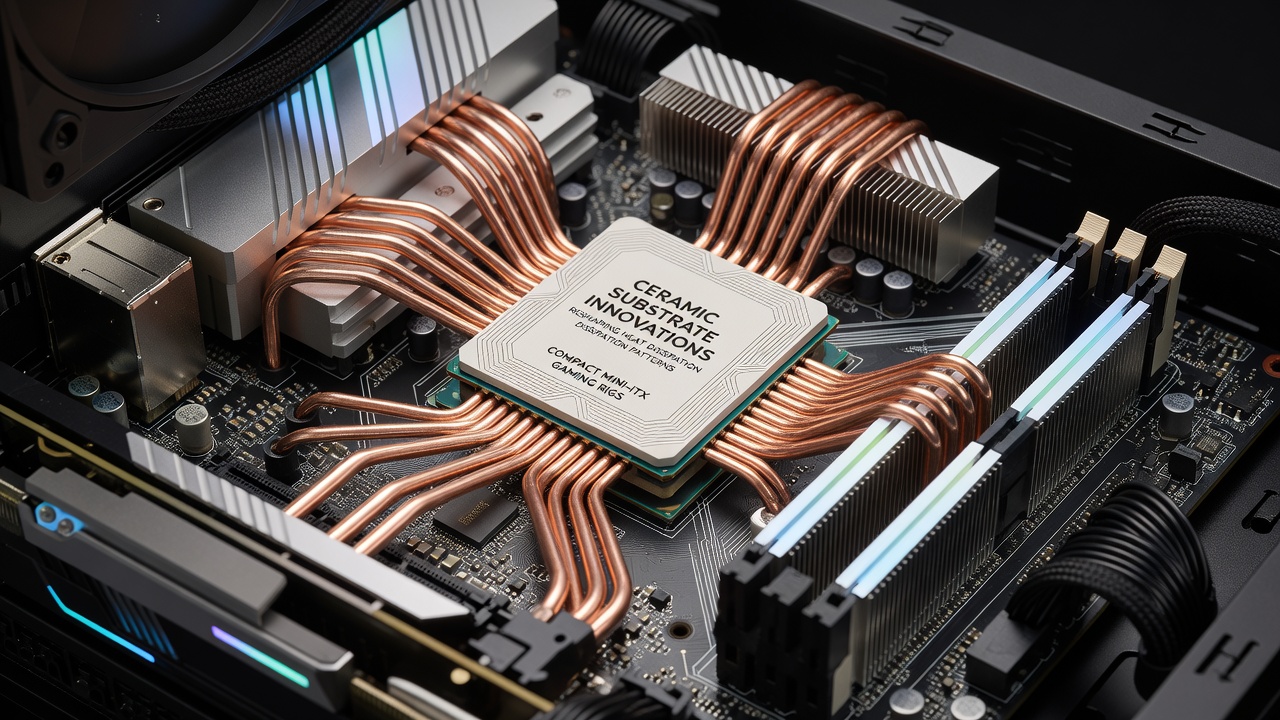
Power consumption measurements collected during October 2026 trials show secondary benefits including reduced fan RPM requirements which in turn lowers overall system acoustics. Engineers working with these materials have also observed improved longevity for electrolytic capacitors positioned near high-current paths because average operating temperatures stay lower over thousands of hours.
Supply Chain and Manufacturing Trends
Global suppliers have expanded ceramic substrate production capacity in response to demand from compact computing segments. Facilities in Taiwan and the United States now incorporate automated inspection systems that detect substrate defects at sub-millimeter scales before final assembly. Trade data indicates shipments of advanced ceramic boards for ITX applications grew 27 percent year-over-year through the third quarter of 2026.
Academic papers published by teams at institutions in Canada and Australia explore hybrid substrate designs that combine ceramic sections with flexible interconnects to accommodate non-planar motherboard layouts. These approaches address the geometric limitations inherent to Mini-ITX while preserving the thermal advantages that ceramic materials provide.
Future Directions in Thermal Architecture
Prototypes under evaluation integrate embedded microfluidic channels within ceramic layers to enable direct liquid cooling at the substrate level. Early results suggest potential for further reductions in thermal resistance without increasing overall system volume. Regulatory filings with electronics standards bodies in the European Union document ongoing compliance testing for these emerging configurations.
Component vendors continue releasing reference designs that specify ceramic substrates for upcoming chipsets targeting integrated graphics workloads. Those who have examined the specifications note compatibility with existing BIOS thermal tables once updated firmware profiles are applied.
Conclusion
Ceramic substrate advancements supply measurable improvements in heat dissipation efficiency for Mini-ITX gaming rigs where spatial restrictions limit conventional cooling options. Manufacturing refinements and performance metrics recorded through late 2026 support broader integration across enthusiast and professional compact builds. Continued material research promises additional refinements in thermal pathways that align with evolving processor and graphics architectures.